The New Zealander who went through post-communism hell to adopt a Romanian girl 20 years ago
Adele Rickerby went through the hell of early post-communism to adopt a girl from Romania. As the plane was flying over Brisbane, an Australian city set on a wide, beautiful river, one of the mothers gathered at the playgroup pointed out…
Diana Mesesan · Journalist
· Updated · 10 min read
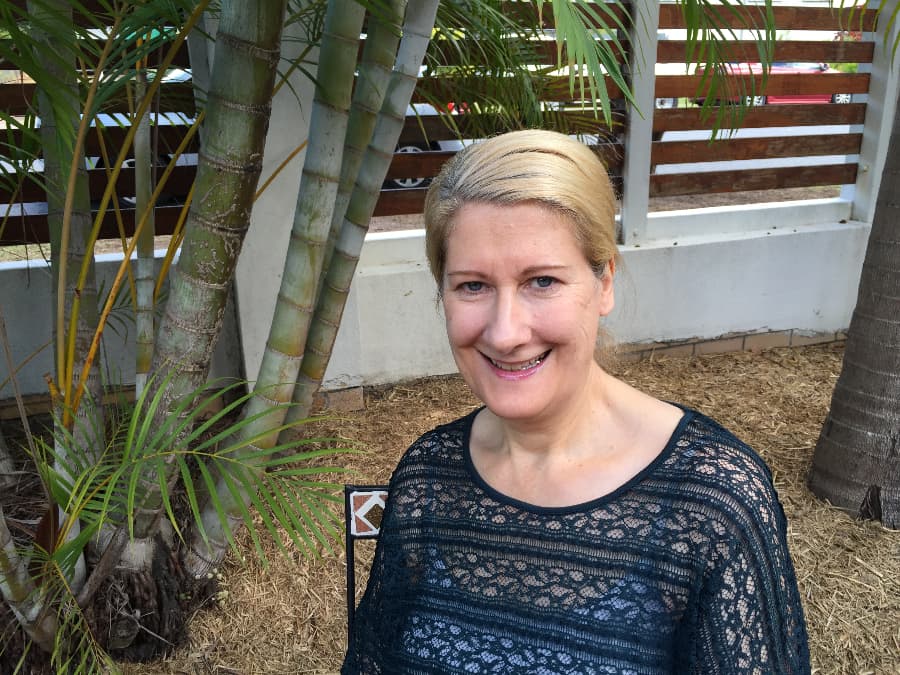
Adele Rickerby went through the hell of early post-communism to adopt a girl from Romania. As the plane was flying over Brisbane, an Australian city set on a wide, beautiful river, one of the mothers gathered at the playgroup pointed out to the plane and told her little daughter: “We came on a plane like this one when we returned from Romania.” The woman was one of Australians who adopted a kid from Romania in the early 90s. Several people living in Brisbane, whose kids were born in Romania, started a playground, so that the children would get together regularly. They’ve never kept it a secret from them that they were adopted. Adele Rickerby, a New Zealander who moved to Australia after she got married, would also bring her daughter to these playgroups. She felt like she had a special bond with the couples that went through the same experience. They were an extended family for each other. For Adele, adopting a child from Romania was not an event from the past that simply went forgotten as years went by. Instead she would think every single day about her six weeks in Bucharest in the early spring of 1991, as she was struggling to adopt a baby girl. After she semi-retired, due to a surgery on her back, she found the peace and time to sit at a table and write down her thoughts. This is how “The Promise I Kept”, her book on adopting a baby girl from Romania, was born. Romania allowed international adoptions until 2001, when it placed a moratorium on the practice. It officially banned these adoptions four years later. But even domestic adoptions go through only with great difficulty. Last year, only 840 children were adopted in Romania, despite that fact that the country had over 58,100 children in the special protection system at the end of March this year. The big problem lies in the complicated laws which define when a child is “adoptable.” Adele Rickerby herself had to overcome a number of limitations to adopt the baby, she tells me during our first Skype discussion. Her voice is very warm and a bit nervous. It is the end of summer here in Bucharest, but the beginning of spring in Australia. Her Romanian-born daughter, who is now in her 20s, helped her install Skype. Adele laughed about it. “I have a reputation for being bad with technology.” When Adele came to Romania to adopt the baby, after she had seen the terrible images of Romanians kids in orphanages, it was late winter. Bucharest, which had just came out of the Communism era, was gray and felt unsafe. Many kids were sold illegally in those early days of freedom, and the rumours about a moratorium were everywhere. Adele was afraid that she would be not able to get through with the adoption. But spring was slowly making its way. April 1991: The winter train ride between Budapest and Bucharest In April 1991, Adele Rickerby took the plane from Australia to Frankfurt. She had a luggage full of documents, which were necessary for the adoption. Back in Brisbane, she left her 6-year old daughter, which she hugely missed, and her husband. Their marriage was kind of falling apart. She was planning to take the plane from Frankfurt to Romania, but when she arrived in Germany, there were no free seats for that weekend. Instead of waiting a few days for the next flight, she booked a train from Germany, which passed through Austria, Hungary and then reached Romania. She had this strong sense of urgency, that she needed to get faster to Bucharest. Everything went well through Germany and Austria. However, soon after the border with Hungary, Hungarian soldiers got on the train and asked for her passport. Then they ordered her off the train and threw her luggage out of the window. It was 4 o’clock in the afternoon and she didn’t wasn’t sure where she was. Adele had no choice but to get off the train, and the train left without her. “I was just standing there in the afternoon, not knowing what was going on.” She went to the wooden train station and waited. Then a man who spoke English and was well-dressed approached her and told her that he was the local taxi driver. He could help her get a visa for Hungary, then take her to the train station in Budapest so she’d catch the same train. “We will get to the border and we will get a visa for you. The same train leaves Hungary at nine o’clock at night. I will make sure you are there on time,” the man told her. She then paid 350 dollars to this stranger to drive her across Hungary. She had the feeling that the man and the soldiers which got her off the train knew each other and were part of a scheme. But what could she do about it? “I got in the taxi. It was getting dark and we started to drive through the back streets of this village. Where are we going, I asked him. I need to get petrol, he replied, which was fair enough. I had no choice but to trust him.” She sat in the back of the car. The man started talking about his wife and family, while Adele was looking out of the window. The Hungarian villages and town they were driving through looked particularly disheartening in the dim winter light. After she finished her nursing training in Australia, Adele did a lot of travelling around the continent with her husband. “I was like, I’ve done a lot of travelling, I can cope, but nothing could prepare me for the shock of Hungary and Romania.” It was just getting darker and colder, but they made it and arrived at the railway station at Budapest. They found an empty carriage, the man threw her suitcases and her sleeping bag, and then he left. Within 15 minutes the train left too. She spent all night just travelling the rest of the way into Bucharest. It was very dark, and every time the train passed through a little town, officials would get on the train, come to her carriage, look at her passport, at her visa, then go through her luggage, searching for contraband. “We’d go through villages that were very poor; a light bulb in this village, a soldier with a rifle just walking on the platform. It was still a lot of snow on the ground, the end of winter; a peasant man’s jacket made out of of sheep’s skin.” At about 8 o’clock, when the train was getting closer to Bucharest and Adele was tidying up her belongings, taking her sleeping bag off, three well-dressed man came into her carriage. One of them was an engineer for the railway station and was on his way to a meeting. He could speak English and asked her was what she doing there. “I said I was adopting a baby girl.” She remembers the main saying: “Our country is poor, but our hearts are rich.” Then the train finally arrived at the Gara de Nord railway station. It was early in the morning.